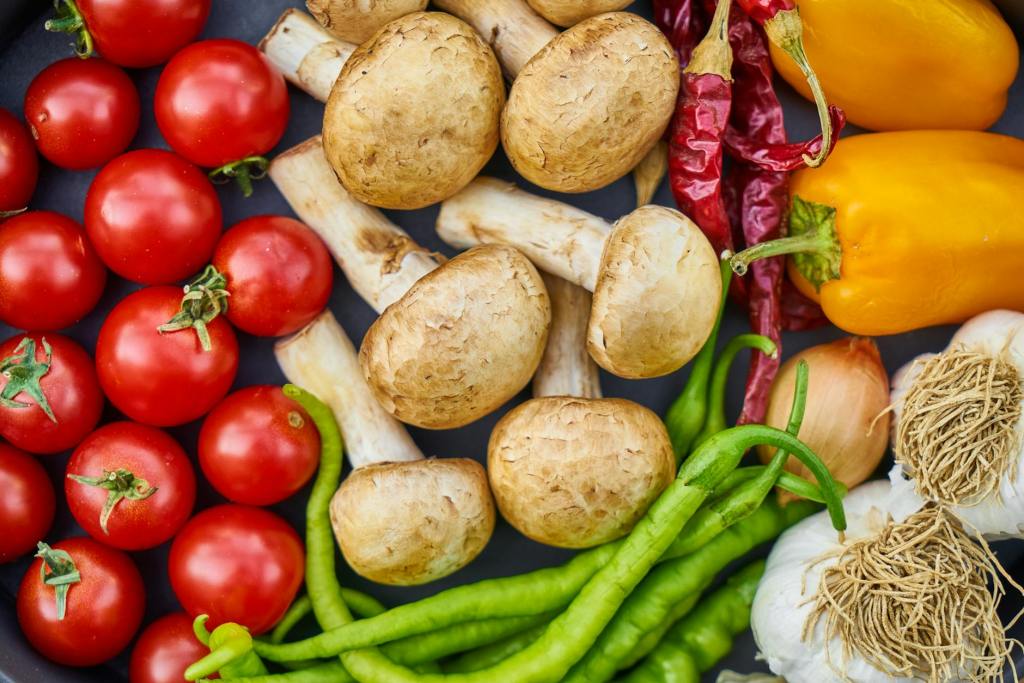
Today, there are many people all over the world taking their health into their own hand through consuming food though to have positive health benefits. This trend is more motivated by the thought of keeping illnesses at bay, treating existing illnesses and exploring foods that have been historically known to treat health problems. Several studies addressing this subject are highlighted in this essay.
The use of food as medicine has been around for many centuries in all parts of the world and continues even today to have an influence in modern society. There are major claims about the treatment benefits that these foods offer but unfortunately sometimes, these claims are not based on scientific facts. Three scientists decided to conduct research on some of these food items to determine the real health benefits they contain. In their 2018 research on compounds found in plants (basil, parsley, fennel, and ginger), Prinsloo, Nogemane and Street, argued that some of the compounds found in these plants are in fact genotoxic and cancerous when consumes (Prinsloo & al, 2018). The scientists were able to isolate compounds from these plants which are in fact toxic for the human body. Some of these compounds are safrole, estragole, Apiol, myristicin (Prinsloo & al, 2018). These scientific findings give good insight to consumers who are more curious about the makeup of these plants and their potential risk when consumed.
While there are some warnings about the use of some plants for treatments, there are some people who support their use for treatment and preventative care. In his article, Sean. C Lucan narrates the story of the challenges facing a young physician working in Bronx New York. During the physician’s work, he sees patients with chronic illnesses such as hypertension and diabetes, however treating these diseases requires healthy eating (Sean, 2018). According to the author, while it may be a simple recommendation made to the patients, however, some patients had challenges gaining access to healthy food due to the lack of available healthy food in the neighborhood. The physician recounts the story of his patient T.C, a man who had high blood pressure and diabetes. After questioning the patient, the physician found out that it was because he could not have access to affordable healthy food. As a solution, the physician helped put in place small markets selling healthy foods near hospital centers, prescribing food for patients so they get discounts at some local grocery stores and coaching on how to prepare flavorful and healthy meals. According to the writer, all these initiatives helped improve many of the patient’s health issues and lives.
parents in Australia are also facing healthy food challenges but of different kind, that is to get their children to eat healthy in the hope to prevent diseases and cultivate healthy lifestyle decisions. To face this challenge, a team of researchers designed an experiment to involve the entire family in changing their children’s eating behaviors. The researchers recognized that obesity occurs in children and more creative solutions are needed to take care of the problem. The researchers used text message reminders for this experiment. The study was set up in phases to obtain feedback from parents and experts about which text messages were useful or had good responses from the children (Chai & al, 2019). According to the writers, as time went on, parents were advised to move from daily text message reminders to twice per week to see if the children will make healthy eating decisions on their own. The experiment would continue over a few years, Parents are to continue questioning their children daily about what they ate and provide the results to the researchers for final evaluation on the efficacity of this experiment with young children.
Generally, finding food that taste good and is healthy for you can be difficult, therefore three writers, Mariantonietta Fiore, Francesco Contò, & Piermichele La Sala compiled articles from different sources that presents healthy and tasty food options from various countries. For example, honey is used in Romania and Slovakia in a lot in dishes and it is thought to have anti-inflammatory and microbial properties; the same is true for mushrooms used in Turkey which have antioxidant properties and abilities to inhibit some enzymes (Mariantoinetta & al, 2019). Another important food mentioned was the use of extracts of the plant Musa paradisiaca (plantain) in Indian ayurvedic medicine to lower blood sugar (Mariantonetta & al, 2019). The authors also stretched on today’s consumer’s willingness to pay for some of the products considered traditional to achieve health even if much is not known about it by the consumer.
Overall, everyone wants to enjoy good health. Many people are more interested in getting great nutritional properties out of the food they eat to stay healthy. With the different articles mentioned in this piece, it is evident that there is enough information available for anyone interested in knowing how to make good choices. However, we need to consider that not everyone is able to gain access to healthy food. This should become a concern for the public and governments so that actions are taken to reverse this trend globally.
References
Chai, L. K., May, C., Collins, C. E., & Burrows, T. L. (2019). Development of text messages targeting healthy eating for children in the context of parenting partnerships. Nutrition & Dietetics, 76(5), 515–520. https://doi-org.ezproxy.umgc.edu/10.1111/1747-0080.12498
Mariantonietta Fiore, Francesco Contò, & Piermichele La Sala. (2019). Food: a medicine for a population’s health and a country’s economy. British Food Journal, 121(6), 1186–1189. https://doi-org.ezproxy.umgc.edu/10.1108/BFJ-06-2019-840
Prinsloo, G., Nogemane, N., & Street, R. (2018). The use of plants containing genotoxic carcinogens as foods and medicine. Food and Chemical Toxicology, 116(Part B), 27–39. https://doi-org.ezproxy.umgc.edu/10.1016/j.fct.2018.04.009
Sean C. Lucan. (2018). When food isn’t medicine – A challenge for physicians and health systems. Preventive Medicine Reports, 10(62–65), 62–65. https://doi-org.ezproxy.umgc.edu/10.1016/j.pmedr.2018.02.007


 the referee nurse
Leave a comment